
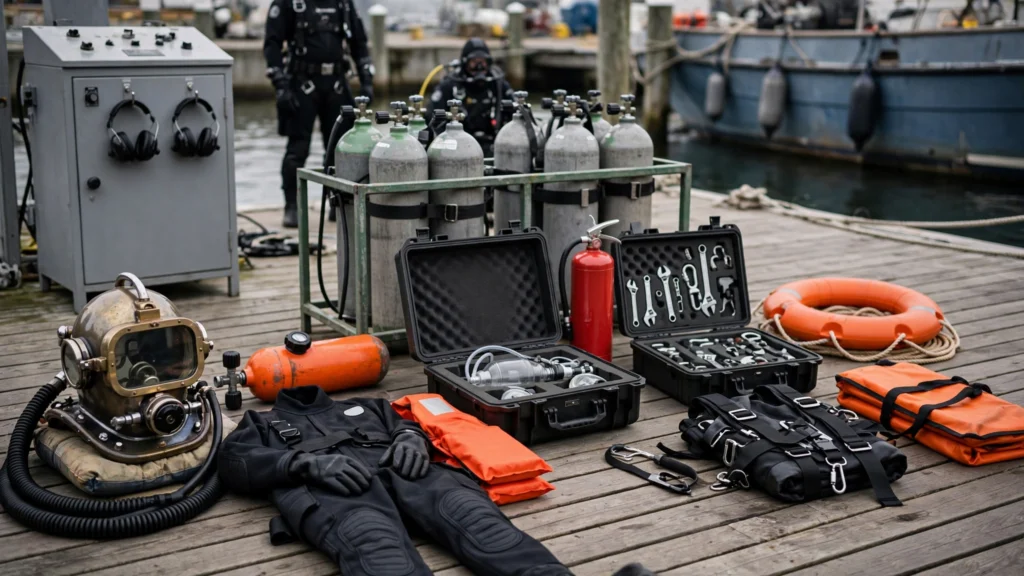
Commercial Diving Operations demand strict safety standards because divers work in high-risk underwater environments every day. From offshore construction to underwater inspections, every task involves hazards that require careful planning, reliable equipment, and trained personnel. Strong safety systems reduce accidents, improve efficiency, and protect both workers and project timelines.
We know that modern Commercial Diving Operations depend on international regulations, continuous training, and advanced technology. Industry organizations such as the International Marine Contractors Association (IMCA) and the Association of Diving Contractors International (ADCI) establish recognized safety practices used across the United States and worldwide. Companies that follow these standards consistently report fewer incidents, better operational performance, and greater client confidence.
Why Safety Standards Matter in Commercial Diving Operations
Commercial Diving Operations expose divers to risks including decompression sickness, equipment failure, entanglement, and limited underwater visibility. Every dive requires careful hazard identification before entering the water. A structured safety plan minimizes these risks while improving decision-making throughout the project.
Professional diving contractors rely on standardized procedures because underwater emergencies develop quickly. According to occupational safety guidance, proper dive planning, communication systems, and emergency preparedness significantly reduce serious incidents. Safety standards also help organizations meet regulatory requirements, lower insurance costs, and maintain operational reliability during complex marine projects.
Key Benefits of Following Safety Standards
Organizations that prioritize safety achieve measurable operational advantages.
- Lower workplace injury rates.
- Improved equipment reliability.
- Greater project efficiency.
- Better regulatory compliance.
- Increased client confidence.
- Reduced operational downtime.
Essential Equipment Safety Requirements
Reliable equipment forms the foundation of safe Commercial Diving Operations. Every helmet, regulator, breathing gas supply, communication system, and backup component must undergo inspection before each dive. Preventive maintenance helps identify worn parts before they create dangerous underwater situations.
Professional diving teams also maintain redundant life-support systems. Backup air supplies, emergency recovery equipment, and surface communication devices remain available throughout every operation. Equipment records should document inspections, repairs, calibration dates, and replacement schedules. Maintaining accurate maintenance logs improves accountability while supporting long-term equipment reliability.
Personal Protective Equipment Standards
Divers require specialized protective gear suited to environmental conditions and project requirements.
| Safety Equipment | Primary Purpose | Inspection Frequency |
|---|---|---|
| Diving Helmet | Head and breathing protection | Before every dive |
| Dry Suit | Thermal protection | Before every dive |
| Harness | Diver recovery | Before every dive |
| Umbilical System | Air and communication supply | Before every dive |
| Backup Air Supply | Emergency breathing | Before every dive |
| Communication System | Surface contact | Continuous monitoring |
Training and Competency Requirements
Highly trained personnel remain the most important safety resource in Commercial Diving Operations. Divers should complete accredited commercial diving programs that include classroom instruction, practical underwater exercises, emergency drills, and medical training. Ongoing education ensures divers remain prepared for changing technologies and evolving industry standards.
Experienced supervisors also play a critical role during every project. They evaluate environmental conditions, monitor dive progress, verify equipment readiness, and coordinate emergency response procedures. Regular competency assessments confirm that every team member maintains the technical knowledge necessary for safe underwater work.
Core Skills Every Commercial Diver Needs
Professional divers should demonstrate competency in several critical areas.
- Underwater communication procedures.
- Emergency response techniques.
- Equipment troubleshooting.
- Hazard recognition.
- First aid and CPR.
- Decompression management.
- Environmental awareness.
Risk Assessment and Dive Planning
Successful Commercial Diving Operations always begin with comprehensive risk assessments. Teams evaluate water depth, currents, visibility, weather conditions, vessel traffic, underwater structures, and marine life before finalizing the dive plan. Identifying hazards early allows supervisors to implement effective control measures before work begins.
Detailed dive plans also establish communication protocols, emergency contacts, decompression schedules, and recovery procedures. Every participant should understand assigned responsibilities before entering the water. Daily safety briefings reinforce expectations while providing opportunities to discuss changing environmental conditions or project updates.
Emergency Preparedness Procedures
Emergency planning remains essential because underwater incidents require immediate action. Professional diving teams conduct regular rescue drills and maintain emergency oxygen equipment at every dive location. Rapid response capabilities significantly improve outcomes during medical emergencies.
Emergency action plans should include evacuation procedures, nearby medical facilities, hyperbaric chamber locations, communication contacts, and transportation arrangements. Practicing these procedures regularly improves team coordination while reducing response times during actual emergencies.
Regulatory Compliance and Industry Best Practices
Commercial Diving Operations must comply with applicable occupational safety regulations and recognized industry standards. In the United States, OSHA Commercial Diving Standards establish minimum requirements for equipment, personnel qualifications, medical evaluations, and operational procedures. IMCA and ADCI guidance further strengthens operational consistency through internationally recognized best practices.
Independent safety audits provide another valuable layer of protection. Regular inspections identify procedural gaps, equipment deficiencies, and documentation issues before they affect project performance. Many leading contractors also implement digital monitoring systems that provide real-time equipment diagnostics, diver tracking, and operational reporting to enhance overall safety management. Explore our latest insights in How ROV Inspections Improve Underwater Survey Accuracy.
Best Practices for Continuous Safety Improvement
Organizations strengthen long-term safety performance through continuous improvement.
- Conduct regular safety audits.
- Review incidents thoroughly.
- Update procedures after lessons learned.
- Invest in modern diving technology.
- Schedule ongoing employee training.
- Encourage open safety reporting.
Conclusion
Commercial Diving Operations succeed when safety remains the highest priority from planning through project completion. Strong training, reliable equipment, thorough risk assessments, and regulatory compliance create safer working environments while improving operational performance. Organizations that consistently follow established safety standards protect their divers, strengthen project outcomes, and build lasting industry credibility.